Where the store loses margin
If your shop runs like this, money is walking out without showing up in any report:
Shelf stockouts nobody notices
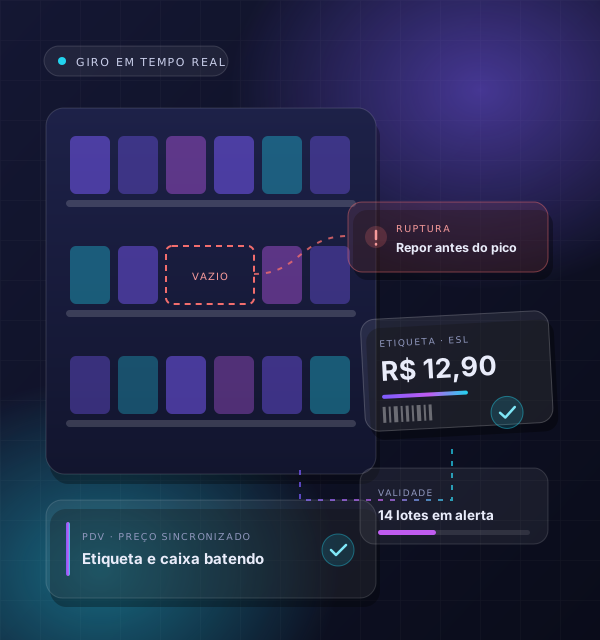
The product is gone from the shelf but still shows in the system. The customer looks, does not find it and buys next door. That lost sale appears nowhere.
Expiry dates hiding in the back of the stockroom
Nobody checks the old batch until the day it expires. By then it is direct margin loss, with no chance of a promotion or transfer.
Shelf price different from register price
The customer complains at checkout, the operator calls a supervisor, the line stops. Beyond the friction, it is a compliance risk.
Supplier orders placed from memory
Buying based on gut feel instead of turnover. You end up with what does not sell and short on what moves fast.
Weekly flyer built by hand
Hours of the team picking item by item, without looking at what is sitting still or close to expiring.
Checkout lines with no traffic forecast
Staffing set by habit, not by footfall. Extra cashiers on Tuesday morning and not enough on Saturday afternoon.
Result: losses nobody can explain at month close, customers leaving for a competitor over missing products, and capital parked in what does not move.
What we solve for grocery stores
Automation that plugs into the POS and back office you already run:
Stockout alerts from turnover
The system compares expected and actual sales per item. If it drops for no reason, the stocker gets a heads-up before the customer complains.
Expiry control with early warning
Batches nearing expiry land on an action list: promote, transfer or return. While there is still time to recover value.
Same price on label and register
Change it in the system and it changes on the shelf. Discrepancies become an alert before they reach the customer and stall the line.
Order suggestions from history
Purchasing starts from what actually moved, factoring seasonality and past stockouts. Less dead stock, fewer gaps.
Flyers built from what needs to move
The offer list comes from real inventory: slow items, batches near expiry, categories with room in the margin.
Traffic forecast for staffing
Footfall history by day and hour shows when to open an extra lane. Shorter lines at peak, fewer idle operators in the lull.
What changes in the operation
Before and after the store can actually see its own inventory:
Stockouts flagged before the customer looks
Batches surfaced while there is still time to sell
Label and register always showing the same value
Orders based on real turnover, not memory
Stores that can see their own inventory
"We only found out about a gap when a customer complained. Now the alert comes first, and the stocker already knows what to bring to the floor."
Store Manager
Neighborhood supermarket (SP interior)
"Expiry loss was a number that showed up at month close with no explanation. With the early warning there is time to run a promotion and recover part of it."
Fresh Department Lead
Three-store chain
* Disclaimer and Performance Warning: The metrics, percentages, financial values, and case studies presented on this site are estimates calculated based on our partner clients' history and operational simulations. Actual results vary and depend on factors unique to each business (such as lead volume, internal processes, market niche, and team engagement), and do not constitute any promise of earnings or guarantee of future results.